Good choices begin with useful information and a little inspiration.
Two shirts can carry the same artwork and still look and feel completely different. The reason is usually the print method. Knowing the basics helps you choose the right product for your design, set realistic expectations and get a result you love.
Here are the three methods you will meet most often with custom products, explained without the jargon.
Direct-to-garment (DTG) printing
DTG works much like an inkjet printer, except the paper is fabric. A specialized printer applies water-based inks directly into the fibers of the garment. On dark garments, a white base layer is printed first so that colors stay bright.
What DTG is great for:
- Detailed artwork, photographs and designs with many colors or soft gradients
- Small quantities, including a single piece, with no setup cost per color
- A soft feel, because the ink becomes part of the fabric rather than sitting on top of it
Things to keep in mind:
- DTG works best on cotton and cotton-rich blends.
- Printed colors can look slightly softer than on a screen, and very bright neon shades cannot be reproduced exactly.
- On dark fabric, the print can feel slightly different to the touch because of the white base layer.
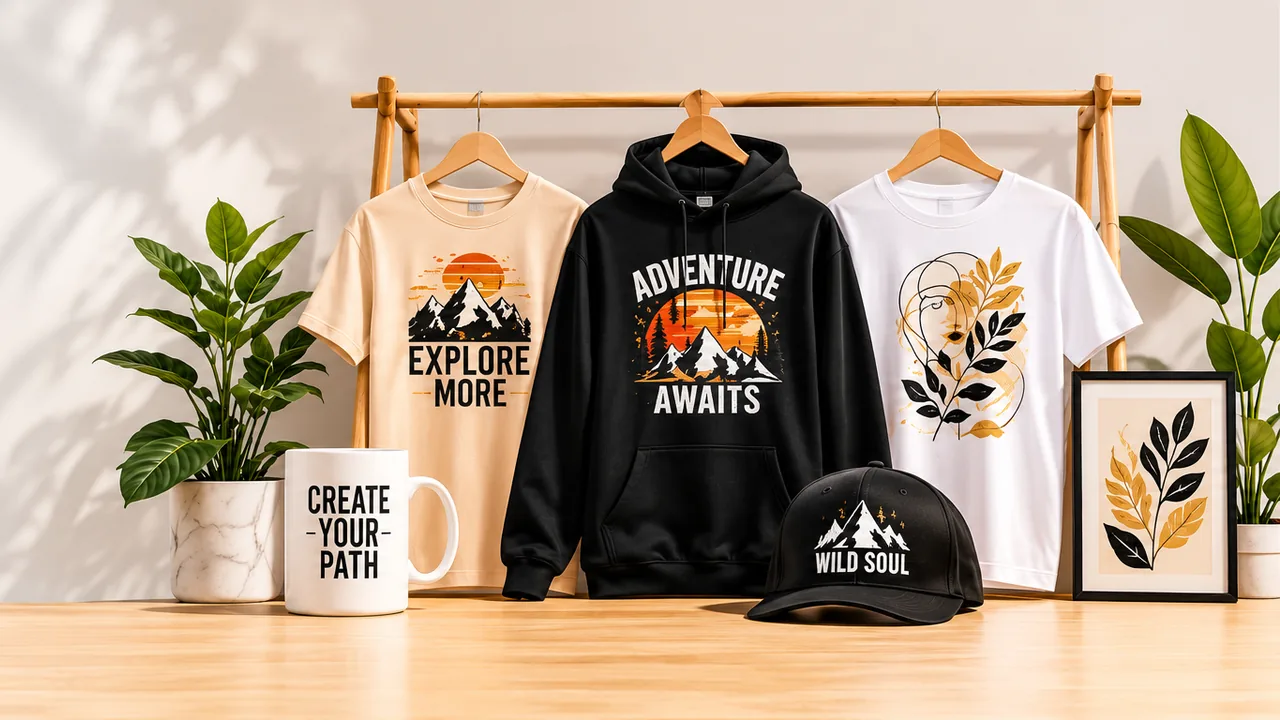
Most printed t-shirts and hoodies are made with DTG, which is why they suit everything from simple text to full illustrations.
Sublimation and all-over printing
Sublimation uses heat to turn special ink into a gas that bonds with polyester fibers. The ink becomes part of the material itself, so the print does not crack or peel and it does not change how the fabric feels.
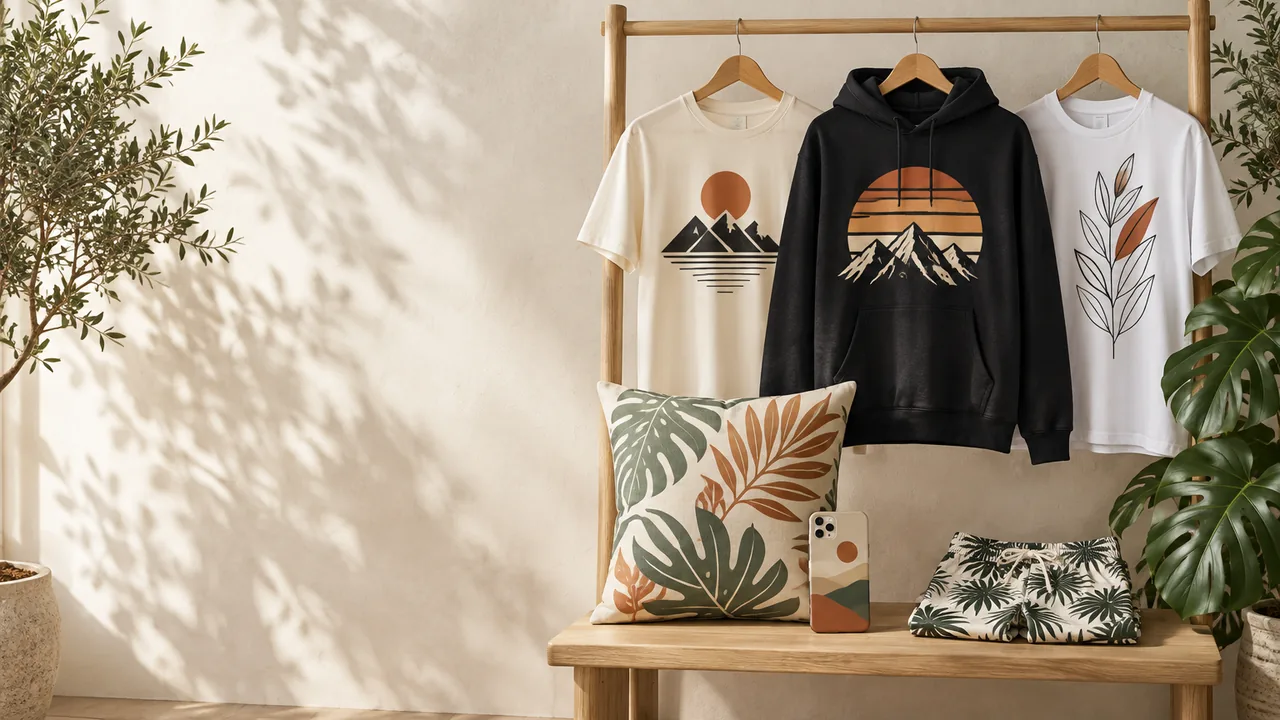
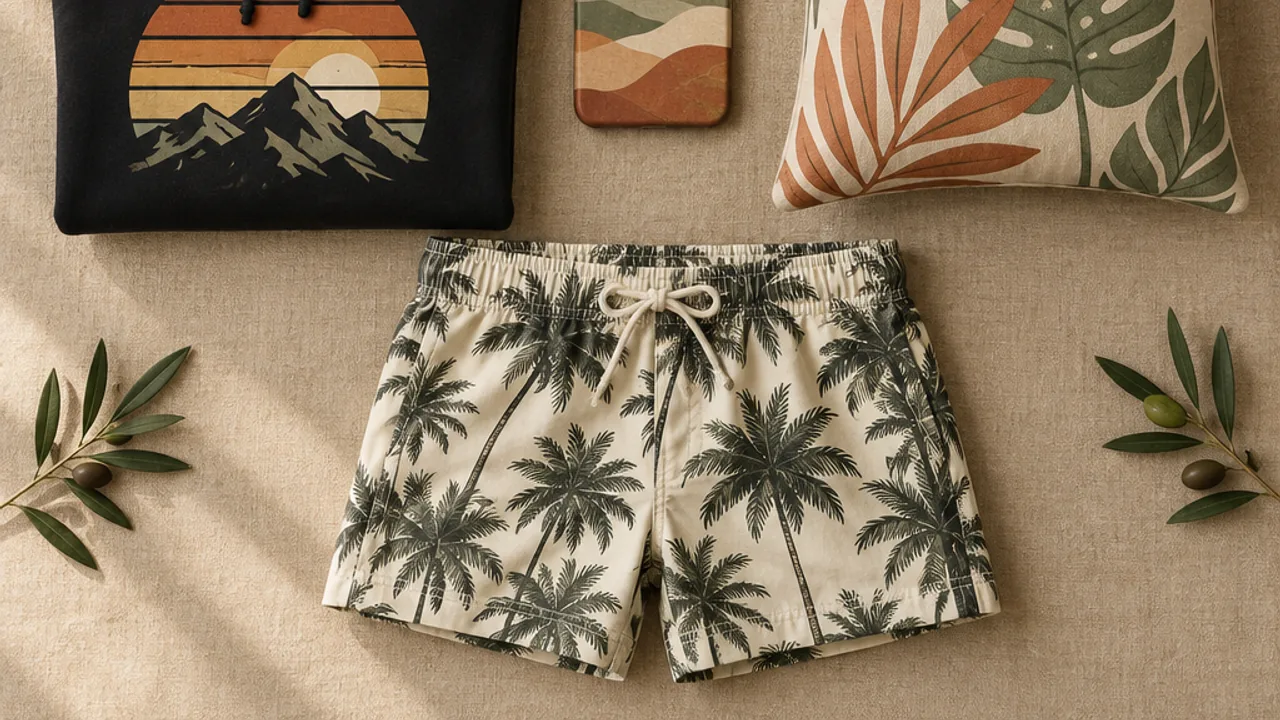
For all-over products, the design is printed onto large panels of fabric, which are then cut and sewn together. This is how a pattern can run edge to edge across swim trunks or cover the whole front of a pillow.
What sublimation is great for:
- Vivid, edge-to-edge patterns and full-color designs
- Polyester and performance fabrics, including swimwear
- Prints that stay bright through washing, sun and water
Things to keep in mind:
- It only works on polyester or polyester-coated materials, not on 100% cotton.
- Because panels are cut and sewn, a pattern may not line up perfectly at every seam.
Embroidery
Embroidery stitches your design into the fabric with thread. A machine follows a digitized version of the artwork, which tells it exactly where to place every stitch.
What embroidery is great for:
- Logos, monograms and small, simple designs
- A premium, textured look that lasts for years
- Heavier garments such as hoodies, caps and jackets
Things to keep in mind:
- Fine detail, tiny text and gradients do not translate well into thread.
- There is a limit to the number of thread colors in one design.
- Embroidered items usually take a little longer to produce.
Which method should you choose?
A simple way to decide:
- Choose DTG for detailed or colorful artwork on cotton t-shirts and hoodies.
- Choose sublimation for all-over patterns, swimwear and home items such as pillows.
- Choose embroidery for clean logos and a premium, long-lasting finish on heavier garments.
Each product page describes how the item is made, so you always know what to expect.
How to prepare a design for any method
Whatever the method, a good file makes a good print:
- Use high-resolution artwork: at least 150 DPI at the final print size, with 300 DPI ideal.
- Save designs as PNG files with a transparent background, unless the background is part of the design.
- Avoid very thin lines and tiny text, especially for embroidery.
- Remember that screens show color with light while printers use ink, so expect small differences.
Not sure which method suits your idea? Send it to us through our free custom-order service. Our team will recommend the best product and method and prepare the artwork for you.